ServicesIron and Sulfur Removal
Iron and Sulfur Removal in Mountain City
Rust rings in the toilet, orange laundry and that rotten-egg smell all have a cause. We test your water at your home, find out what is really going on, and fit a system sized for your levels. Sometimes the fix is smaller than you think.
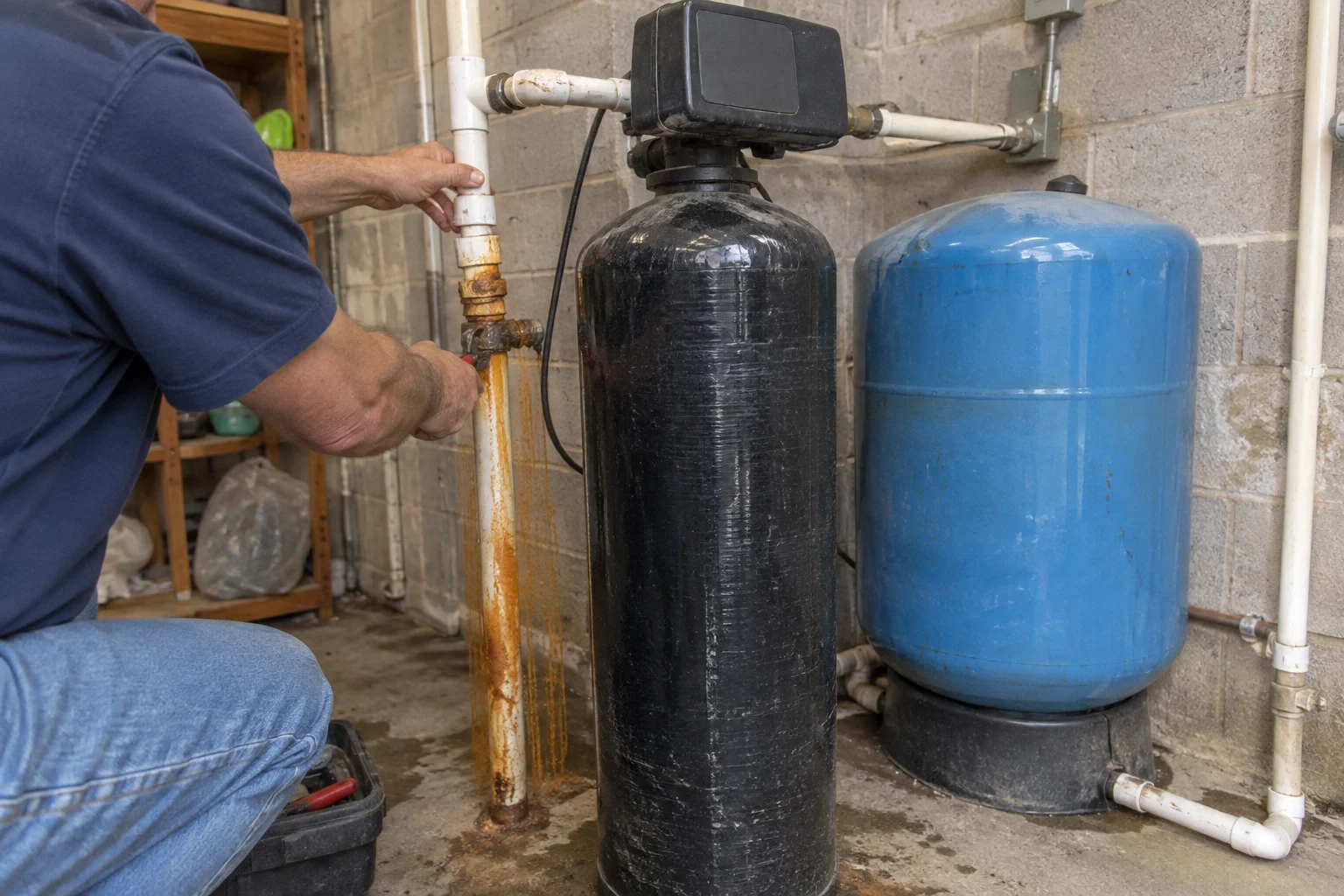
Find the source, then fix it
Iron and sulfur cause some of the most annoying water problems in a house. Iron leaves orange and brown stains on sinks, tubs and white clothes. Hydrogen sulfide gas makes water smell like rotten eggs and can tarnish silver and fixtures. Neither one goes away on its own.
The trouble is that the same symptom can come from different places. A sulfur smell might be in the water coming into your home, or it might be made inside your water heater. Brown water might be dissolved iron, or it might be rust from old galvanized pipe. A filter only fixes the first case in each pair. That is why we test before we sell anything.
Once we know what you have and how much, we match the equipment to it. Light sulfur and heavy iron need very different setups. Getting that right the first time saves you from buying a second system a year later.
What the work includes
- In-home water test
- We check iron, hydrogen sulfide, manganese, pH and hardness. We also test hot and cold taps separately, which tells us a lot about where a smell starts.
- Plain results
- We go over the numbers with you at the kitchen table. You hear what each one means and which ones actually matter for your home.
- The right system for your levels
- For most iron and sulfur we use an air-injection oxidizing filter that turns the dissolved metal and gas into particles and backwashes them away. For light sulfur, a catalytic carbon tank may be enough. Heavy loads can call for a stronger oxidizer.
- Free installation
- We offer free installation. That covers plumbing the system in at your main line, adding a bypass valve and running the backwash line to a drain.
- Setup and walkthrough
- We set the backwash schedule to your water use and show you the bypass. You will know what normal looks and sounds like.
Signs iron or sulfur is the problem
Orange or brown stains
Rings in toilets, streaks under faucets and stains on the shower floor point to iron. Bleach usually makes them worse, not better.
Rotten-egg smell
That smell is hydrogen sulfide. Even small amounts are easy to notice in a hot shower.
Smell only from the hot tap
If the cold water is fine, the water heater may be the source. The anode rod can react with the water and make the gas. We check this before recommending any filter.
Black specks or slime
Dark grit in aerators or a slimy film in the toilet tank can mean manganese or iron bacteria. Both need a slightly different approach.
Dingy laundry
Whites that turn yellow or tan over time often trace back to iron in the wash water.
How a job goes
- 1
You call us
Tell us what you are seeing or smelling and when it started. We set a time to come test.
- 2
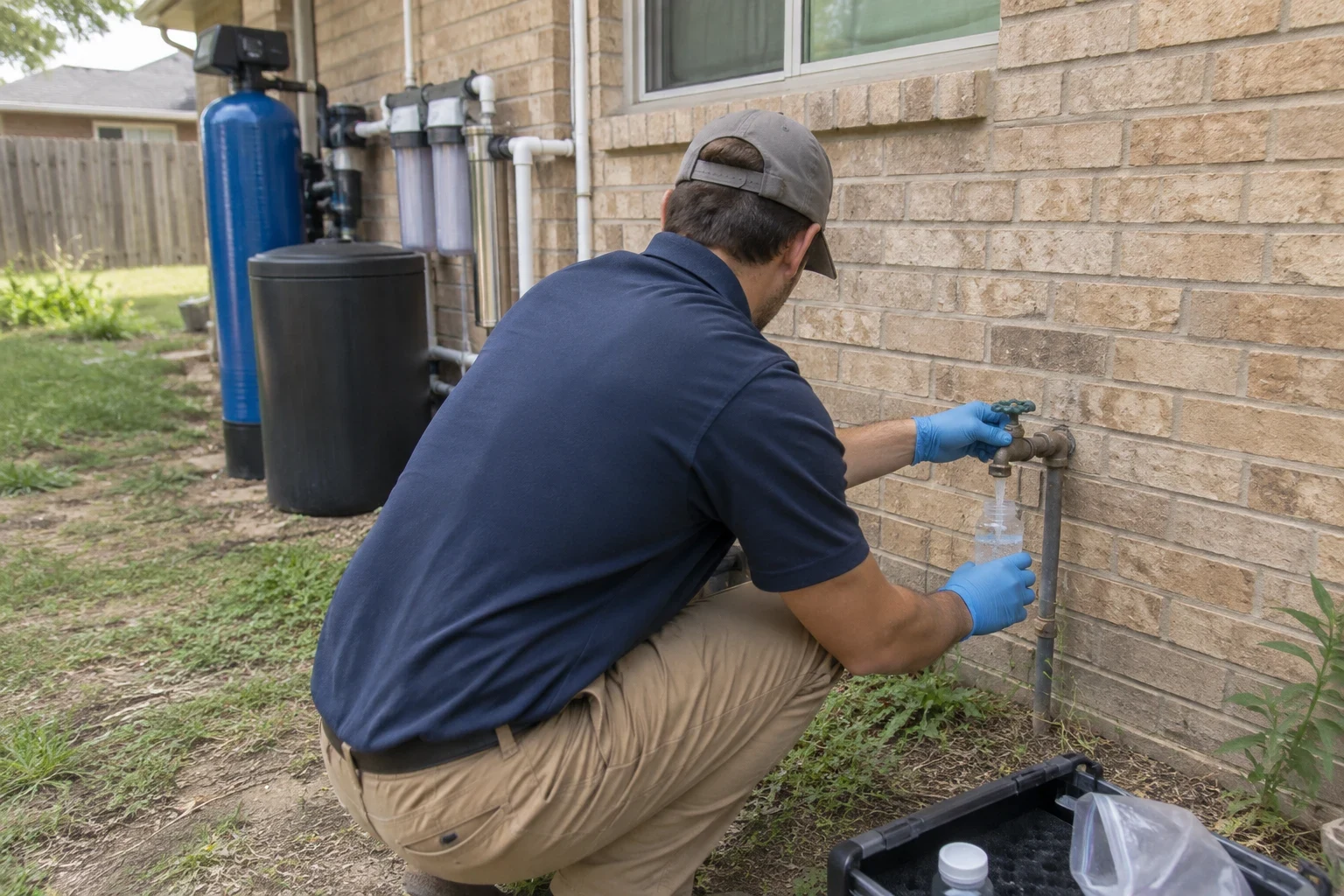
We test at your home
Testing takes us about as long as a cup of coffee. We look at where your main line comes in and where a drain is, since the system needs both.
- 3
We give you an honest answer
If a water heater anode swap or a pipe repair is the real fix, we say so. If you need a filter, we explain which one and why, and give you a written quote.
- 4
Install and check
On install day we cover the floor, plumb the system in, run a first backwash and retest the water. We clean up and haul off the packaging before we leave.
What moves the price
Installation is free, so the price comes down mostly to the equipment your water needs. We do not guess at that. The test results set the size and type of system, and we write the quote around them.
- How much iron and sulfur
- Low levels can be handled by a smaller, simpler tank. High levels need more media or a stronger oxidizer.
- Your water use
- More bathrooms and more people mean a higher flow rate. The tank has to keep up during the morning rush without letting iron slip through.
- What else is in the water
- Manganese, low pH or iron bacteria change the setup. Sometimes a second stage is needed.
- Space and drain access
- The system needs room near the main line and a place to send backwash water. A long drain run adds parts.
Iron and sulfur questions
Something not covered here? (512) 982-4901
Can a water softener take out iron?
A softener can remove a small amount of dissolved iron. Above that, the iron fouls the resin and the softener stops working well. If your test shows both hardness and iron, we may suggest an iron filter ahead of a softener.
Why does only my hot water smell?
That usually points to the water heater, not the water supply. The anode rod can react with sulfate in the water and make hydrogen sulfide. Swapping the anode type often fixes it without a filter, and we will tell you that if the test shows it.
Is water with iron or sulfur safe to drink?
At the levels we usually see, iron and sulfur are mostly a stain, taste and smell problem. They are not the same as a health contaminant. If you have other concerns, our water testing and analysis service looks at a wider range.
How much upkeep does an iron filter need?
Most air-injection systems clean themselves by backwashing on a set schedule. You do not add salt or chemicals. The media wears down slowly over years and will eventually need replacing.
Will this get rid of the stains I already have?
No. The system stops new stains from forming. Existing stains on fixtures and laundry need an iron-safe cleaner, and we can point you to what works.
Find out what is in your water
We test at your home, show you the numbers and give you a straight answer. If you need a system, you get your quote by phone or at the table, and installation is free.