ServicesReverse Osmosis Systems
Reverse Osmosis Systems in Mountain City
We install reverse osmosis at your kitchen sink so you get clean, good-tasting water for drinking, coffee and cooking. Before anything goes in, we test your tap. Then you get a plain answer on whether RO solves your problem or another system would serve you better.
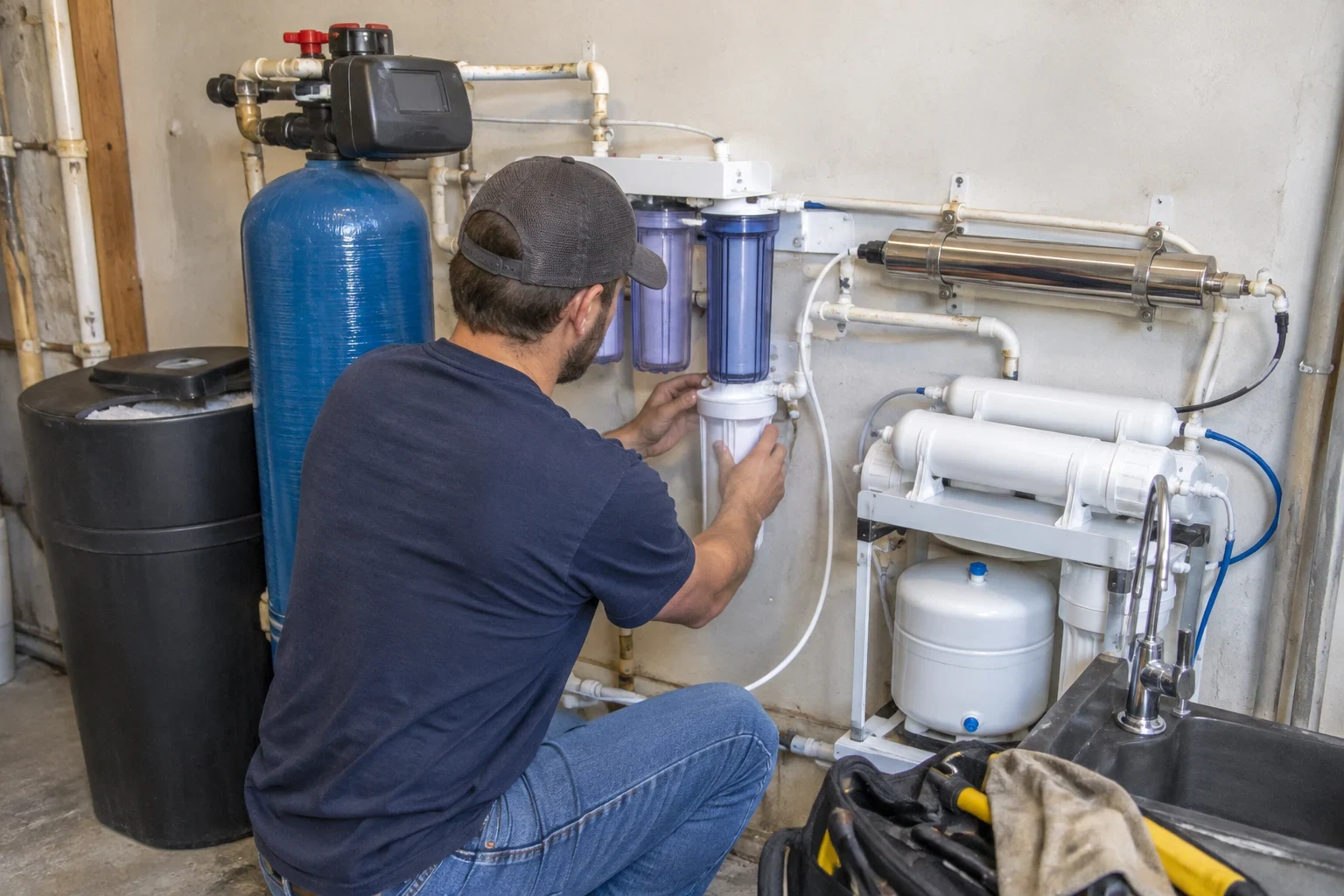
How reverse osmosis works under your sink
Water is forced through a membrane so fine that dissolved solids stay behind. That covers lead from older pipes, nitrates, fluoride, arsenic and most of the minerals that crust up a kettle. The small counter faucet then gives you water for drinking, coffee, ice and meals.
An RO unit serves a single tap rather than the entire house. It suits you when your concern is drinking water. It falls short when the issue is a shower smell or scale on all your fixtures, which whole-home filtration or a water softener handles better.
That is why testing comes first. Very hard water can scale a membrane before its time, and you will hear that from us before you spend anything. With the water's makeup known, we put in the system that solves your actual problem.
What you get with the system
- Sediment and carbon stages up front
- The first stages trap sand, flakes of rust and chlorine ahead of the membrane. Chlorine wears out most membranes, so these filters guard the costliest piece.
- The membrane itself
- Most of the cleaning happens here. We choose its size from your test results and how much water your household drinks.
- A small tank, or a tankless model
- We offer a tankless RO system (800 gallons per day, 7 stages, 0.0001 micron) and a lower-price 5-stage tank RO (sediment, GAC, carbon block, RO membrane and post carbon) with an under-sink tank.
- Its own faucet and a drain connection
- A separate faucet goes on the counter or sink deck, and the leftover water is piped to your drain. An unused sprayer or soap hole saves us from drilling, since the faucet can sit there.
- Extras if you want them
- A remineralizing stage adds back some calcium and magnesium for flavor. If the fridge or ice maker sits close enough for a neat run, we can tie it in too.
When an RO system is worth a look
Bottled water keeps piling up
If the cases stack up in the pantry because nobody wants to drink from the tap, an RO faucet usually puts an end to it. No more hauling jugs home from the store.
Your home has older plumbing
Older lead solder or brass fittings can add lead at the tap even when the utility's water is fine. A test tells us if that is happening, and RO removes it well.
Cloudy ice and white spots
Cloudy ice cubes, crusty kettles and spotted glasses point to dissolved minerals. A lot of water in Central Texas runs hard, and RO pulls those minerals out of what you drink.
Coffee or tea tastes off
Flat, bitter or metallic flavors often come from what is dissolved in the water. Cleaner water usually fixes it.
A test showed something you want gone
If a lab result flagged nitrates, fluoride or high total dissolved solids, RO is one of the few home systems that handles all of them at once.
How the job goes
- 1
Free water test
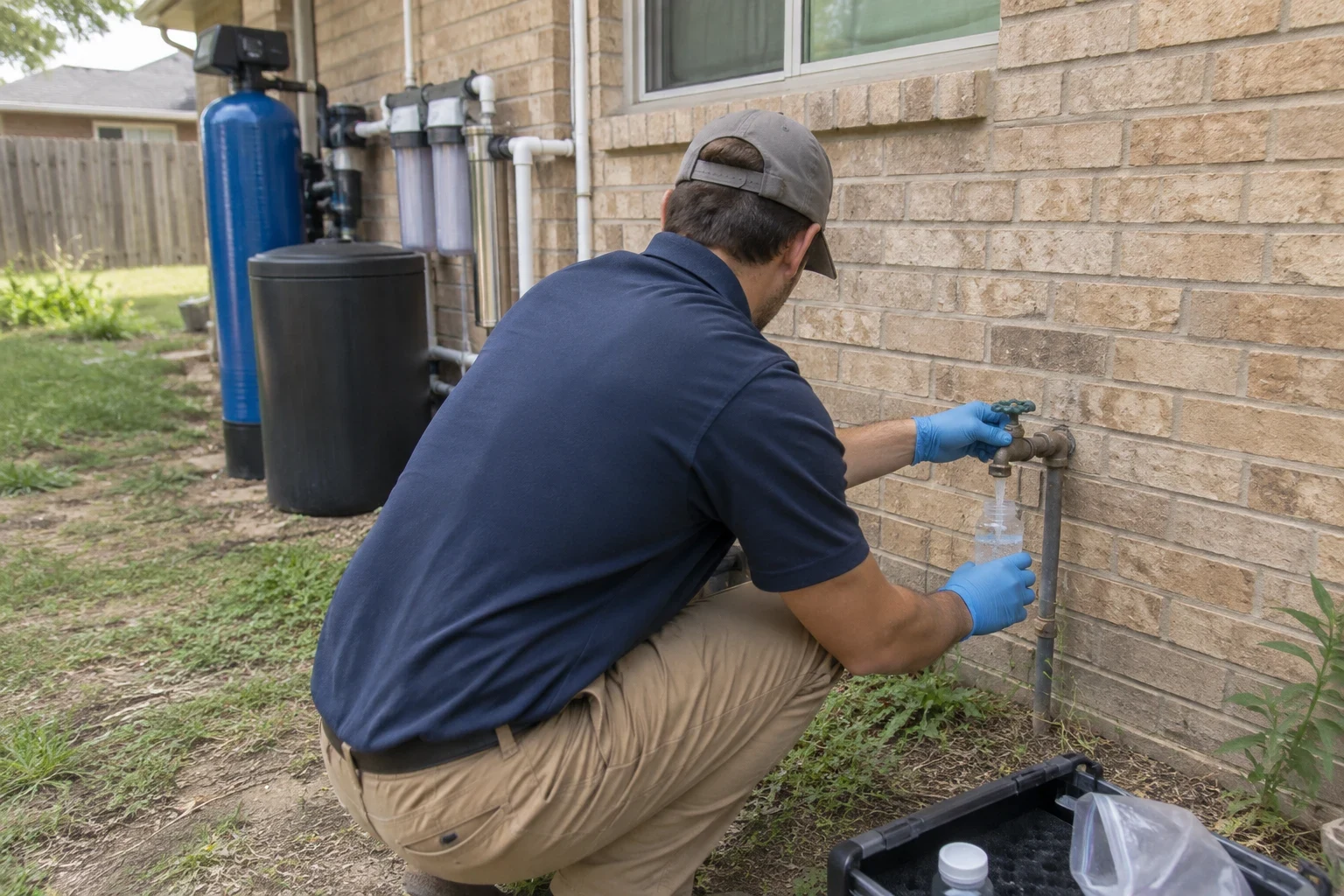
We test your tap for hardness, total dissolved solids, chlorine and any specific concern you have. You see the numbers and we explain what they mean.
- 2
A straight recommendation
We tell you if RO fits, what size, and if anything upstream should come first. If a carbon filter alone would solve your problem, we say that too.
- 3
Install day
We shut off the cold line, clear the cabinet and mount the system. Then we set the faucet, connect the drain and check every fitting for drips. Most kitchens take a few hours.
- 4
Flush and walkthrough
We flush the first tank of water down the drain to rinse the new filters. Then we show you how to change the filters and leave you a simple schedule.
What sets your price
We install for free, so the cost mostly reflects the system and whatever parts your kitchen needs. Once we have tested, you get the price by phone or face to face, itemized. We won't toss out a number before we've seen your water and your sink.
- Tank versus tankless
- A system with a standard tank is the cheaper choice. Going tankless saves cabinet room but costs more at the start.
- What your test turned up
- Heavy sediment or very hard water can require added pretreatment to protect the membrane. Cleaner water keeps the setup simple.
- Your counter and where the faucet goes
- Granite or quartz needs special bits and extra time to drill. An empty sprayer hole makes the job easy.
- Extras and added lines
- A remineralizing stage, a booster pump for weak water pressure or a fridge line each put more parts on the list.
- Long-term upkeep
- Prefilters are usually swapped once or twice a year, while a membrane lasts several years. We tell you what that upkeep costs before you decide.
Questions to ask before adding RO
Something not covered here? (512) 982-4901
Does reverse osmosis waste water?
Yes, and more than many people guess. The membrane rinses off the minerals and other matter it stops, so more water goes to the drain than into the tank. Today's units waste far less than older ones, and a booster pump helps when line pressure runs low. We can go over the figures for the system we suggest.
My city water meets the standards. Do I still need RO?
You might not. Water can leave the utility clean and still collect lead or an odd taste in your home's own pipes. So we test at your faucet before recommending anything. If it tests clean and the only issue is a chlorine taste, a basic carbon filter may be enough.
Will RO water taste flat?
It might, because the membrane strips out the minerals that flavor water. A remineralizing stage puts a bit of calcium and magnesium back. Most households get used to it within a week or two.
Will RO fit under a sink with a garbage disposal?
Usually it will. The filters hang on the cabinet's side wall, and the tank fits in a back corner or on its side. If space is very tight, a tankless unit is a good option.
How often do the filters need changing?
Plan on new prefilters and a new post filter once or twice a year, sooner if your family drinks and cooks with a lot of water. The membrane typically lasts a few years. We leave a written schedule so nothing slips.
Is RO the same as a water softener?
No, they handle separate tasks. A softener treats all the water coming into the house and keeps scale off pipes, fixtures and appliances. RO cleans water at one drinking faucet. Some homes do well with both, and your test tells us if yours is one.
Find out what is in your tap first
We will test your water at no charge and tell you if reverse osmosis is the right fix. If it is, you get a clear quote and free installation.