ServicesWater Softener Installation
Water Softener Installation in Mountain City
We measure your hardness before we talk about equipment. Then we size a softener to your water and your household, install it cleanly, and set it to the numbers we found. You get soft water that stays soft, without a unit that's too big or too small.
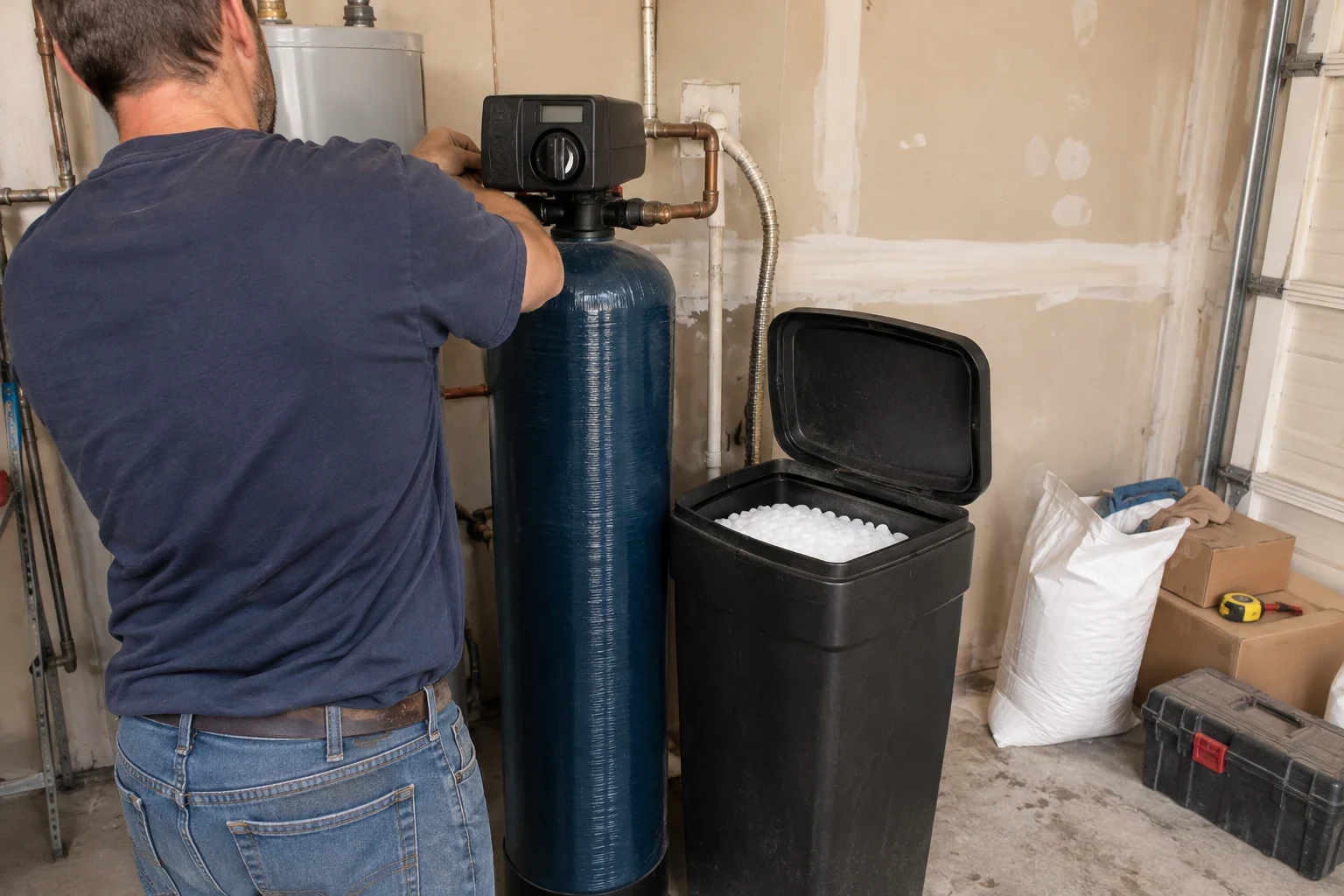
Softener sizing based on your numbers
A softener trades the calcium and magnesium in your water for sodium or potassium. That ends the white crust on fixtures, keeps scale out of the water heater and helps soap do its job. It only works well when it is sized properly and set to the hardness you really have.
We begin by testing your water at home. Hardness is measured in grains per gallon, and we check iron too, since it changes how a softener should be set up. From your household size and daily water use, we work out the grain capacity you need.
When your water turns out not hard enough for a softener, we tell you. If you want to avoid salt entirely, we can explain salt-free water conditioners, including their limits.
What the install includes
Hardness and iron test
We test the water coming into your home before anything gets ordered. The results set the size of the unit and the hardness setting on the valve.
Right-sized equipment
We match the resin tank to your hardness and daily use. An oversized unit wastes salt and money. An undersized one regenerates too often and lets hard water slip through.
Bypass valve and clean tie-in
We cut the softener into your main line with a bypass valve, so you can turn it off and still have water. Most homes here have a softener loop in the garage or utility area, and we use it when it's in good shape.
Drain line with an air gap
The softener flushes brine during each regeneration. We run that line to a proper drain with an air gap so wastewater can't back up into your system.
Brine tank setup and programming
We fill the brine tank, set the valve to your tested hardness and schedule regeneration for the middle of the night, when nobody is running water.
A quick lesson on your system
Once it's running, we walk you through it. You'll see where the salt goes, which way the bypass turns and what the readout on the valve is telling you. A few minutes now can save you a service call down the road.
Signs hard water is causing trouble in your home
White crust on faucets and showerheads
That chalky buildup is calcium. It clogs aerators and showerhead holes, and it comes back fast after you clean it.
Spots on dishes and glass
Cloudy glasses out of the dishwasher and a hazy shower door point to minerals drying on the surface. Central Texas limestone puts a lot of them in the water, which is exactly what a softener takes out.
Popping noises from the water heater
Hard water leaves a layer of scale on the floor of the tank, and that layer holds heat away from the water. The crackling sound is the giveaway, and longer heating times show up on your bill.
Soap that won't lather
Hard water fights soap and shampoo. You use more of it, and skin and hair can feel dry or filmy afterward.
An old softener that isn't keeping up
If you still see scale with a softener in place, or it burns through salt quickly, the unit may be worn out, set wrong or sized too small. A test tells us which.
How the job goes
- 1
Free test at your home
Call us to pick a time for testing your water at home. We measure hardness, iron and anything else that affects the setup, and you see every number.
- 2
Your results and a quote in writing
We go over the test and name the softener that suits it. If a softener is the wrong fix, you hear that along with what would work. The quote spells out the equipment and any added plumbing, so nothing pops up later.
- 3
The install
With your water off, we connect the softener to the line, fit the bypass and run the drain. Our work area gets covered, and we clean up afterward.
- 4
First run and a faucet test
We kick off the first regeneration and test water at a faucet to confirm it runs soft. If the reading is off, we fix the setting before leaving.
What moves the price
Installation is free, so most of the cost is the equipment itself. What you need depends on what your test shows and how your plumbing is set up. We give you the full price in writing after the test.
- Capacity
- Harder water and a bigger household need more grain capacity. That means a larger resin tank and more media.
- Valve type
- A metered valve regenerates based on how much water you actually use. It saves salt and water compared to a simple timer, and it costs more up front.
- Your existing plumbing
- A clean softener loop makes for a simple install. No loop, an awkward location or a long run to a drain adds parts.
- Extra treatment
- If the test finds iron or a strong chlorine taste, you may want iron and sulfur removal or a carbon filter ahead of the softener. We only add these when the results call for them.
Questions about softeners
Something not covered here? (512) 982-4901
Is my water hard enough for a softener?
A test answers that. We measure hardness in grains per gallon, and the figure shows whether a softener is worth the money. If yours is low, we'll tell you to save it.
How often does salt need to be added?
It depends on your hardness, how much water you use and the unit's size. A properly sized metered softener uses less salt than an older timer unit. In most homes, you glance at the brine tank now and then and pour in a new bag when the salt gets low.
How is a softener different from a salt-free conditioner?
A softener removes the hardness minerals. A salt-free water conditioner leaves them in the water but changes them so they're less apt to stick as scale. For truly soft water, choose a softener. If less scale and no salt bags are what you're after, a conditioner may suit you.
Does soft water feel slippery?
At first it can feel a bit slick in the shower. That's soap washing fully away rather than clinging to minerals. Within a week or two, most people don't notice it.
Will a softener remove iron as well?
It can handle a little dissolved iron, but a lot of it fouls the resin. That's part of why we test for iron before sizing. When the level is high, we'll recommend an iron filter installed before the softener.
Is softened water OK to drink?
Softening puts a little sodium in the water, more if it started out very hard. If you're limiting sodium, use potassium in place of salt, or add a reverse osmosis system at the kitchen sink for drinking and cooking.
Find out what's really in your water
We'll test your hardness and iron at your home and tell you straight whether a softener makes sense. If it does, you'll get a written quote, and installation is free.