ServicesWell Water Filtration
Well Water Filtration and Treatment in Mountain City
Your well is your own water plant, and nobody tests it for you. We start with a free water test, find what is really causing the stain, smell or grit, and install the filters that fix that problem. No guesswork and no extra equipment.
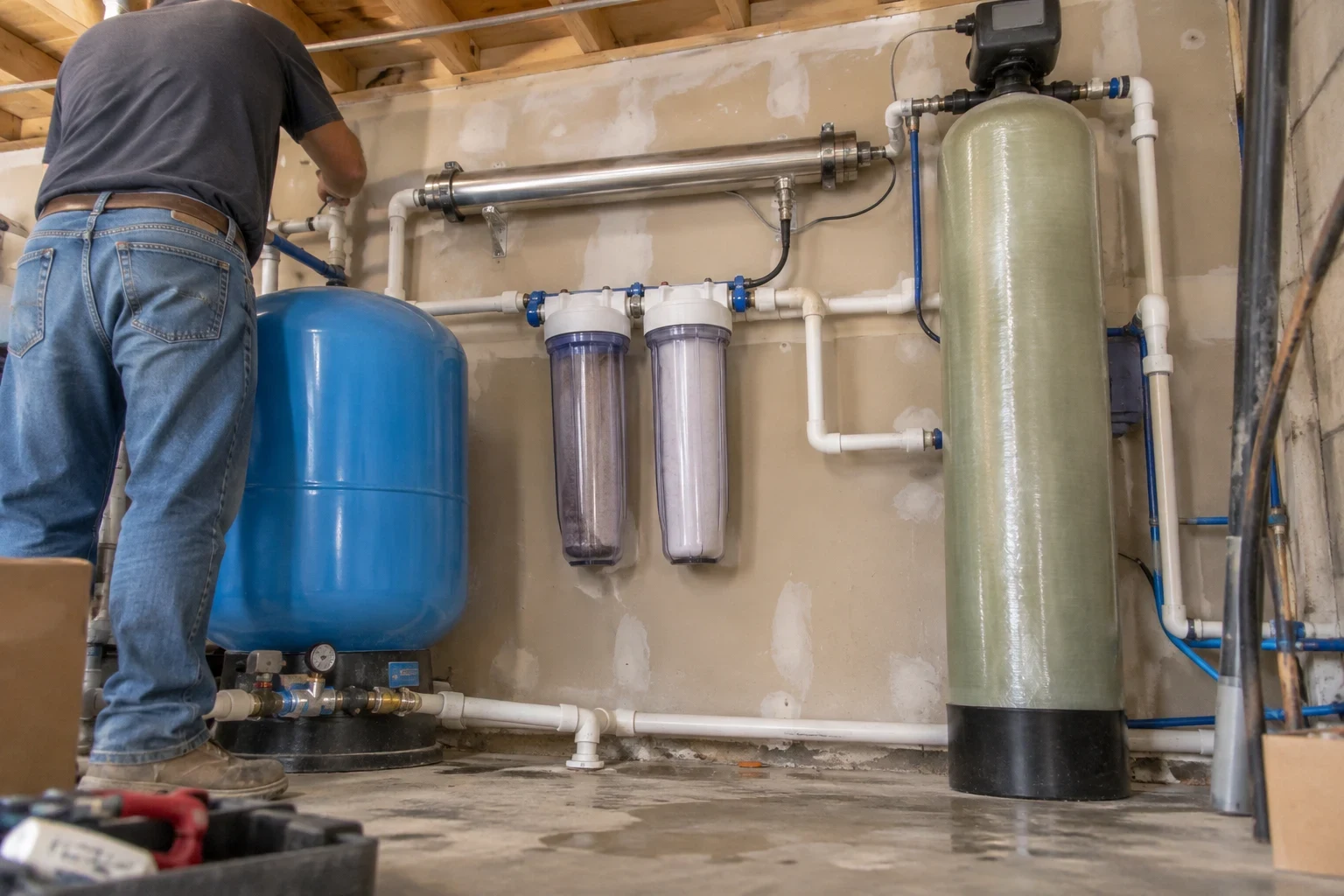
What well water filtration covers
A private well can carry several problems at once. Sand and silt. Iron that turns fixtures orange. A rotten-egg smell from sulfur. Hard minerals that scale up your water heater. Sometimes bacteria. Each one needs a different fix, and one filter rarely handles all of them.
That is why we test before we sell anything. A sulfur smell can come from the well itself or from the water heater. Orange stains can be iron or manganese. If we guess wrong, you pay for a system that does not solve the problem. The test tells us the cause, and the cause tells us the equipment.
Wells drawing from the limestone around Mountain City often run hard, so hardness is one of the first things we check. Then we put together a setup in the right order, usually sediment first, then iron or sulfur, then softening or conditioning, then disinfection if the test calls for it.
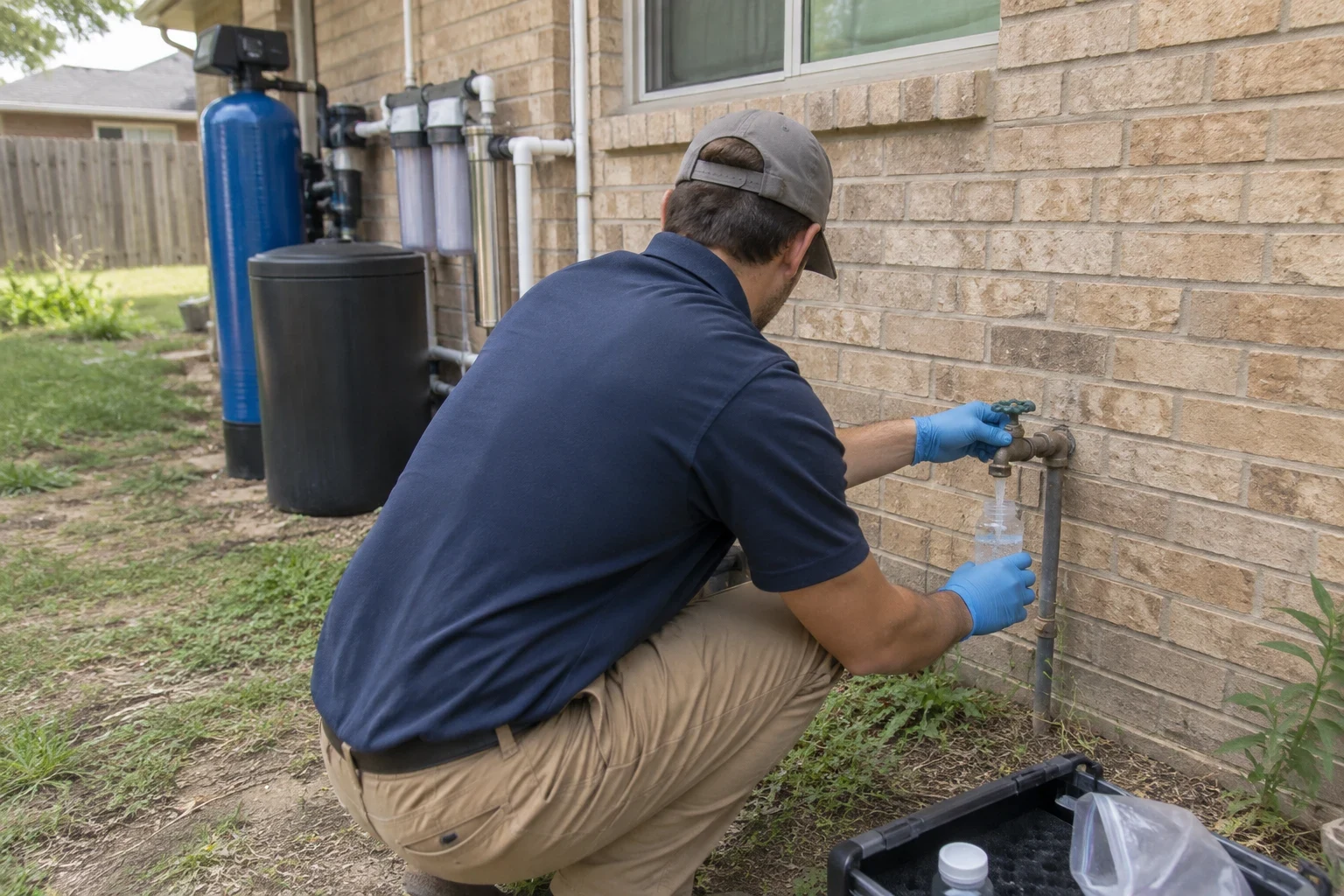
What the work includes
- 01
Free water test
We check hardness, iron, manganese, pH, sulfur smell and sediment at your tap. If bacteria is a concern, we explain lab testing through our water testing & analysis service.
- 02
Sediment filtration
A spin-down or cartridge filter traps sand and grit at the front of the line. That keeps every stage after it cleaner and saves wear on your faucets and appliances.
- 03
Iron and sulfur treatment
If the test shows iron, manganese or hydrogen sulfide, we size an oxidizing filter to match the readings. Our iron and sulfur removal page explains that stage in more depth.
- 04
Hardness control
Based on your numbers and what you prefer, we add a water softener or a salt-free conditioner after the iron stage.
- 05
UV disinfection
When bacteria is a risk, a UV lamp goes in as the last stage. By then the sediment and iron are already out, so nothing in the water shades the bacteria from the light. See UV water purification for how it runs.
- 06
Installation
Every setup gets a bypass, so if a filter ever needs service you can route water around the equipment and keep your taps running. Installation is free.
Questions about Well Water Filtration?
Call(512) 982-4901Signs your well water needs treatment
Orange or black stains
Rust-colored rings in toilets and tubs point to iron. Black or brown streaks often mean manganese.
Rotten-egg smell
That smell is usually hydrogen sulfide. When it shows up only in hot water, the heater's anode rod can be adding to it, so we look there too before recommending anything.
Grit in aerators
Sand clogging faucet screens or the washer inlet means sediment is getting past the well screen.
White crust and spots
Scale on showerheads and spotty dishes are signs of hard water. The same buildup collects inside your water heater over time.
No test in years
Well water changes with drought, heavy rain and pump work. If you cannot remember your last test, start there.
How a well water job runs
- 1
Test at your home
We draw water from a tap near the pressure tank and test it on the spot. You see the readings with us.
- 2
Plain recommendation
We tell you what we found, what each problem needs and what it does not need. If a single filter will do, we say so.
- 3
Quote by phone or in person
You get a written quote that lists each piece of equipment. Take your time with it.
- 4
Install day
Most systems go in near the pressure tank. We set up the bypass, run a drain line for backwash, protect the floor, and clean up when we finish.
- 5
Startup and walkthrough
We flush the system, retest the water, and show you the settings and what upkeep each part needs.
What moves the cost
There is no single price for well water filtration because no two wells are the same. The test sets the scope. Here is what changes the number.
- How many problems
- Sediment alone is a small job. Iron, sulfur, hardness and bacteria together mean more stages.
- Contaminant levels
- Higher iron or sulfur readings call for larger filter tanks or an air injection stage.
- Water use and flow
- Bigger households and higher flow rates need larger equipment so pressure does not drop.
- Space and plumbing
- Room near the pressure tank, a drain for backwash, and a nearby outlet for powered stages all affect the setup.
Well water filtration questions
Do I really need a test first?
Yes. Iron, manganese and sulfur can look and smell alike, and each one is treated differently. The test is free, and it keeps you from buying equipment that misses the real problem.
Will a whole-home filter fix my well water?
Sometimes, if the only issue is taste or light sediment. Wells with iron, sulfur or bacteria usually need dedicated stages. We will tell you plainly which case you are in.
Where does the system go?
Usually in the garage, utility room or pump house, near the pressure tank and after it. We need a drain for backwashing filters and an outlet if the setup includes UV or a powered valve.
Will my water pressure drop?
It should not if the system is sized right. We check your pump flow during the visit and size the tanks so your showers stay strong.
What upkeep should I expect?
Sediment cartridges get changed every few months, UV lamps once a year, and softeners need salt. We go over each item before we leave.
Find out what is in your well
One visit, one test, and a straight answer about what your water needs. Nearby in Kyle or Buda, we can come out to you as well.