ServicesWater Testing & Analysis
Water Testing & Analysis in Mountain City
Spots, stains and odd smells can each come from more than one cause. We check the water right in your home, show you every reading and match the fix to what we actually find. If your water needs nothing, we will say that plainly.
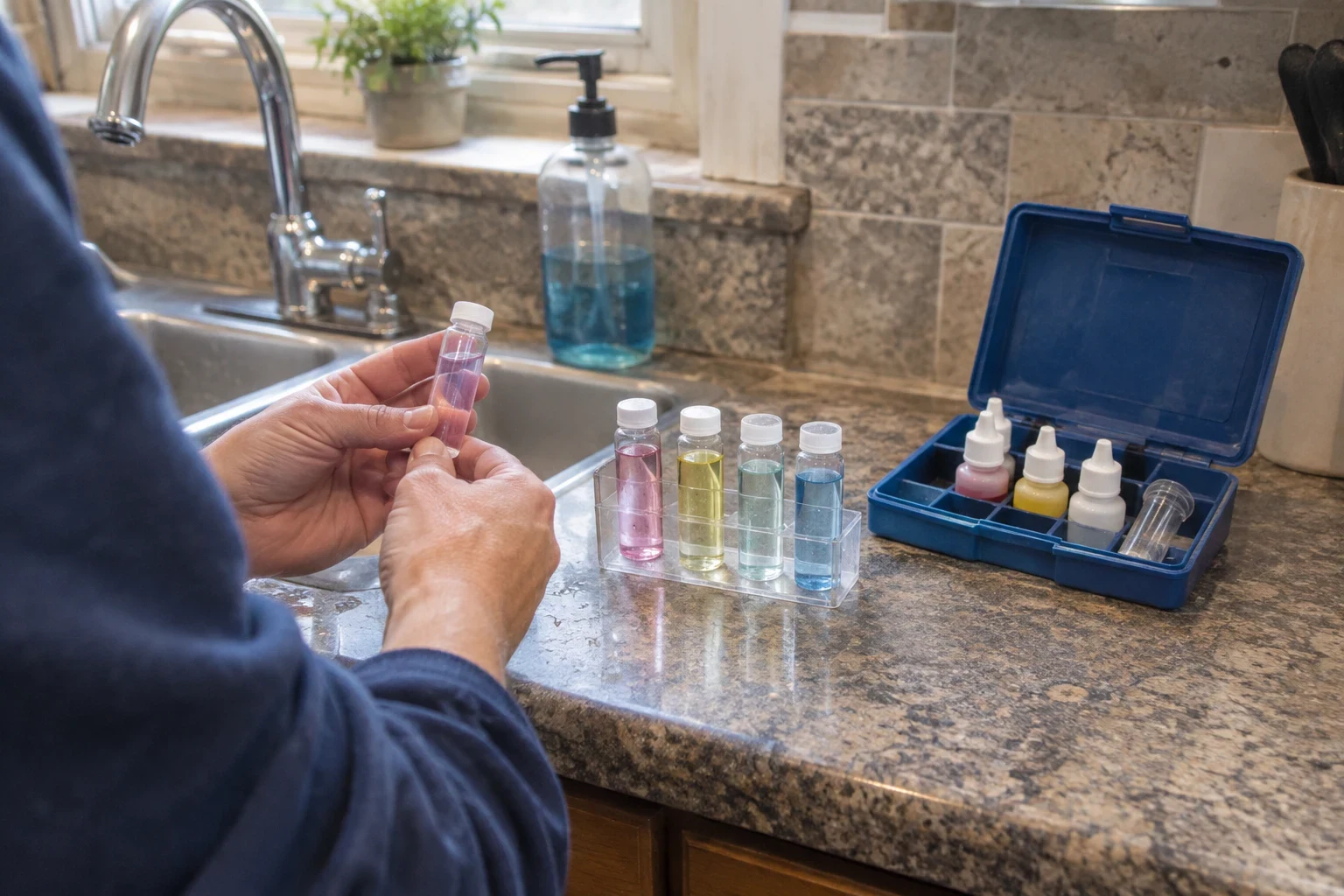
Test first, then decide
Most water problems show up as a symptom. Spots on dishes, a smell from the shower, a stain in the tub. The trouble is that two different causes can look the same. Scale and iron can both leave marks. Chlorine and sulfur can both make water smell off. If you guess wrong, you pay for equipment that does not touch the real problem.
So we start with a water test. We check the things that drive treatment choices, write the results down and explain them in everyday words. Then we match the fix to what we actually found.
Hard water is common across Central Texas, but how hard it is changes from home to home. A test tells you where yours sits before you spend money on a softener or a salt-free conditioner.
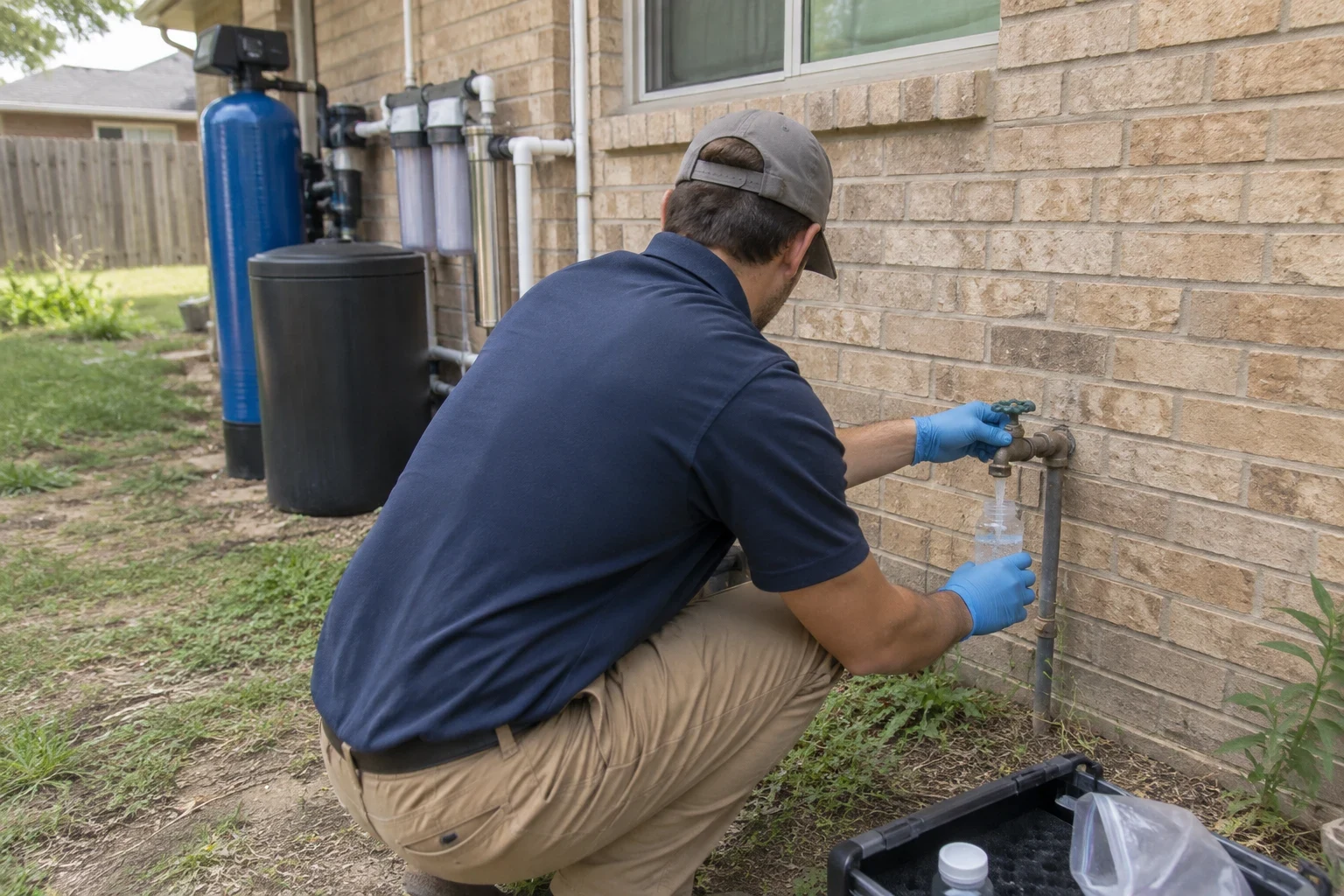
What we check during a water test
- 01
Hardness
We measure calcium and magnesium in grains per gallon. This number decides whether a water softener installation makes sense, whether a salt-free conditioner is enough, or whether you can skip both.
- 02
Iron and manganese
These cause orange, brown or black stains on fixtures and laundry. Even small amounts can show up over time. If we find them, we can talk about iron and sulfur removal.
- 03
Chlorine
City water is treated with a disinfectant, and that is a good thing. It can still leave a taste or smell some people do not like. We check the level so we know if whole-home filtration would help.
- 04
pH and total dissolved solids
pH tells us if water leans acidic or alkaline, which affects pipes and some equipment. Total dissolved solids gives a rough picture of everything mixed into the water. Both help us size and pick the right system.
- 05
Your symptoms, written down
We ask what you have noticed and where. Kitchen only, or every tap. Hot water or cold. Those details often point to the cause as much as the meter does.
- 06
Lab referral when needed
Some questions, like lead from older plumbing, need a lab to answer properly. When that is the case, we say so and explain how to get a sample tested by an independent lab.
Questions about Water Testing & Analysis?
Call(512) 982-4901Signs your water is worth checking
Chalky buildup on fixtures
White scale on aerators, shower heads and glass shower doors usually means hardness. Testing shows how much you are dealing with.
Orange or brown rings
Rust-colored marks in toilets and sinks often point to iron. Confirm it before spending money on equipment.
Water that smells like eggs
Hydrogen sulfide is a common cause, but the water heater can produce the same smell. A test helps tell the two apart.
A swimming pool taste
Tap water that tastes or smells like a pool usually has chlorine in it. That is most often a taste problem rather than a safety one.
You just moved in
A new house comes with no water history. A first test gives you a baseline to compare against later.
Your current system falls short
Problems that stick around after a filter or softener goes in mean the water may have changed, or the system never fit it. A fresh test sorts out which.
What happens on test day
- 1
A quick phone call first
Tell us what you have noticed and when it started. We settle on a day and hour that suit your schedule.
- 2
Samples from the kitchen sink
We draw water from the kitchen faucet, and sometimes from a second spot in the house. The whole test usually runs under an hour. Your water stays on and nothing gets moved.
- 3
Every reading, explained
We show you each number we wrote down. Then we tell you which ones are normal, which ones run high and what that means for your home.
- 4
A plain answer on what to do
When treatment would help, we name the system and point to the reading that calls for it. When the water checks out, we tell you so. You can take your time deciding.
What affects the cost of testing
The basic in-home water test is free. It covers the common items that drive treatment decisions. Costs only come into play if you need something the in-home test cannot answer, and we tell you before anything is ordered.
- What you are testing for
- Hardness, iron, chlorine and pH are covered in the free test. Questions like lead or bacteria need a lab panel, which has its own fee from the lab.
- Number of samples
- One tap is usually enough. If a problem only shows up in one bathroom, or only in hot water, a second or third sample may be worth it.
- Follow-up testing
- After a system is in, a retest confirms it is doing its job. We will tell you if that is needed and whether it adds any cost.
- What comes next
- If you go ahead with a system, we write out the quote line by line so you can see what you are paying for. We also offer free installation.
Water testing questions
Is the water test really free?
Yes. The in-home test costs you nothing. If you want a lab test for something like lead, we explain that it carries a separate lab fee before anything is sent.
Will you try to sell me a system?
We will tell you what the numbers say. If they point to a problem, we explain the fix. If they do not, we say your water is fine and leave it there.
My water comes from the city. Do I still need a test?
City water meets drinking standards, but it can still be hard, taste of chlorine or pick up metals from older pipes inside your home. A test shows what is coming out of your tap, not just what leaves the treatment plant.
Can you test for lead?
Lead usually comes from older plumbing and fixtures, not the water supply. An accurate lead result needs a lab. We can explain how to collect the sample and what to do if it comes back high, which may include a reverse osmosis system at the kitchen sink.
Do I need a water softener?
Not always. Hardness varies from home to home. We measure yours first and then tell you if a softener, a salt-free conditioner or nothing at all is the right call.
How long does it take?
Most in-home tests take under an hour, including the time to go over the results with you. Lab results take longer, and we will tell you roughly how long when we order them.
Know what is in your water before you buy anything
We will test it at your sink, show you the numbers and give you a plain answer. Serving Mountain City and nearby towns like Kyle and Buda.